
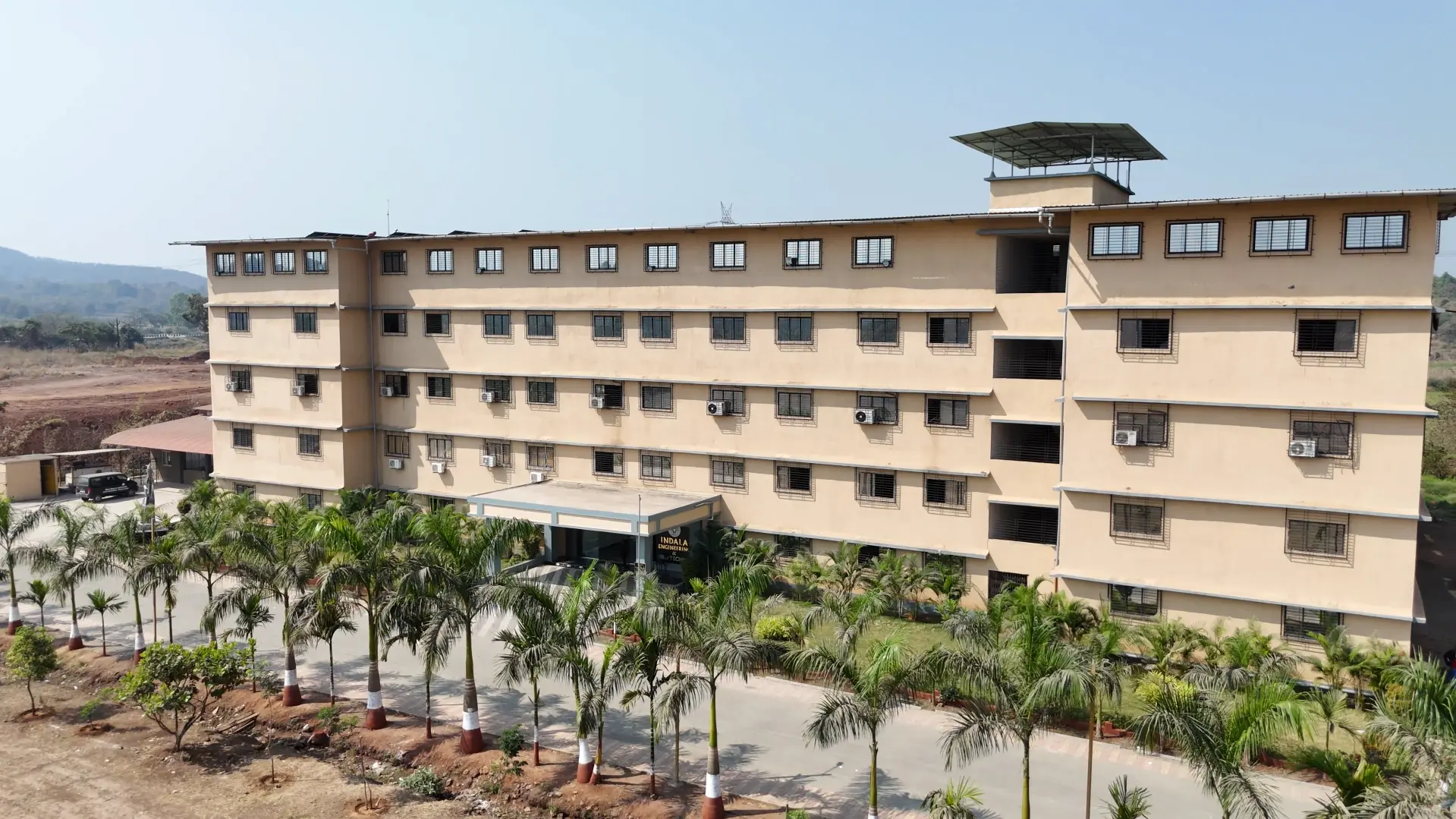
Department
Science & Humanities
The aim of the Department is to provide high quality education to students with the assistance of well-qualified, dedicated and highly motivated faculty members. Knowledge in basic science is an essential ingredient of any professional course.

1 / 4
Overview
About the Department
The aim of the Department is to provide high quality education to students with the assistance of well-qualified, dedicated and highly motivated faculty members. Knowledge in basic science is an essential ingredient of any professional course. Department of Applied Sciences & Humanities offers Applied Sciences and Humanities Courses as prescribed by the curriculum of the Mumbai University in the 1st year of engineering program.
Department of Science & Humanities imparts the knowledge of fundamental sciences and mathematics to students of all the engineering disciplines. The department has 6 full time well qualified faculty and 2 supporting staff members. All the laboratories are equipped with latest instruments and experimental setups, lab records, lab manuals, User manuals, journals etc.
Relevant software is installed on all the desktops in Language Lab. Science & Humanities dept. has grievance cell in which suggestions are accepted from the students for future actions.
Curriculum
Syllabus
Download the scheme and syllabus PDFs for the Science & Humanities programme.
- Download PDF
First Year
Semester I & II
Principles
Vision & Mission
Vision
To build a strong scientific and humanistic foundation in students that empowers them to excel in their chosen engineering disciplines.
Mission
To build a strong platform by imparting the concepts and principles of basic sciences, mathematics and computer programming. To develop scientific attitude required for success in the highly competitive global marketplace. To serve the needs of industry, public sector and society with deep awareness of professional ethics and human values. To inculcate communication and soft skills to make the students effective communicators. To promote awareness related to environment and its protection among students.
Leadership
HOD's Desk
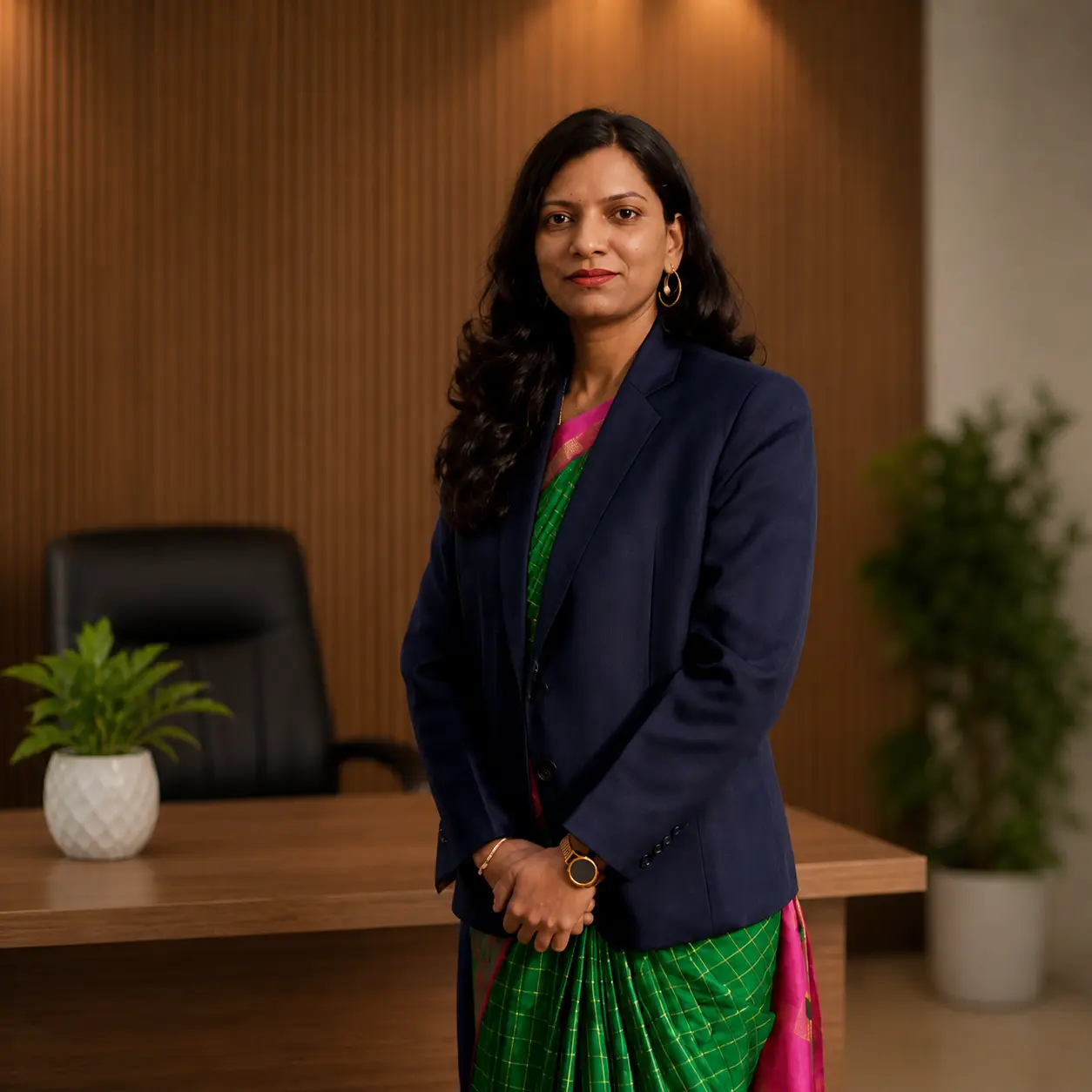
Prof. Dnyaneshwari Patil
Head of the Science & Humanities Department
Welcome to the Science & Humanities Department at Indala College of Engineering! As the Head of the Department, I am thrilled to lead a team of dedicated faculty members who are committed to providing a well-rounded education to our students. Our department aims to cultivate a strong foundation in mathematics, physics, chemistry, communication skills, and professional ethics. We believe that a balanced blend of technical and humanistic education is essential for the overall development of our students. Our experienced faculty members are passionate about their subjects and strive to create an engaging learning environment.
We encourage critical thinking, effective communication, and ethical values among our students, preparing them to excel in their chosen engineering disciplines. I invite you to explore the opportunities and challenges offered by our department and embark on a rewarding educational journey. Best wishes, Prof. Dnyaneshwari Patil, Head of the Science & Humanities Department, Indala College of Engineering.
People
Faculty
Meet the teaching faculty of the Science & Humanities department.

Prof. Dnyaneshwari Chudaman Patil
Head of Department, Assistant Professor
Ph.D. (Mathematics) Pursuing, M.Sc., B.Ed.
13+ Years experience
dnyaneshwari.patil@icoe.ac.in
Prof. Avinash Mahendra Meherkhamb
Assistant Professor
M.Sc. (Physics)
1 Year experience
avinashm@icoe.ac.in
Prof. Sharad Valmik Pawar
Assistant Professor
M.A. (English), SET
15+ Years experience
sharad.pawar@icoe.ac.in
Prof. Madhuri Amar Saitwal
Assistant Professor
M.A., B.Ed. (English), M.A. (Yogshastra)
7+ Years experience
madhuri.saitwal@icoe.ac.in
Prof. Devayani Ramchandra Mhaskar
Assistant Professor
M.Sc. (Mathematics), B.Ed.
5+ Years experience
devayani.mhaskar@icoe.ac.in
Prof. Shraddha Sachin Sonone
Assistant Professor
M.Sc. (Chemistry), B.Ed.
12+ Years experience
shraddha.sonone@icoe.ac.in
Prof. Pranali Sandip Pashte
Assistant Professor
B.E. (Computer Engineering), M.Tech. Pursuing
5 Years experience
pranalipashte@icoe.ac.in
Prof. Yukta Shashikant Patil
Assistant Professor
B.E. (Computer Engineering), M.Tech.
5 Years experience
yukta.patil@icoe.ac.in
Prof. Neha Ravindra Shinde
Assistant Professor
M.Sc. (Organic Chemistry), D.Pharmacy
3 Years experience

Prof. Prashant Sureshrao Bijwe
Assistant Professor
M.Sc. (Mathematics)
15 Years experience
prashant.bijwe@icoe.ac.in
Purpose
Objectives
The objective of the Science & Humanities Department at Indala College of Engineering is to provide a strong foundation in essential subjects such as mathematics, physics, chemistry, communication skills, and professional ethics. Our aim is to nurture well-rounded engineers who possess a holistic understanding of the world, along with technical expertise.
Outcomes
Program Outcomes (PO)
Graduates of the Science & Humanities programme will be able to:
- 1
Engineering Knowledge: Apply the knowledge of mathematics, science, engineering fundamentals, and an engineering specialisation for the solution of complex engineering problems.
- 2
Problem Analysis: Identify, formulate, research literature, and analyse complex engineering problems, reaching substantiated conclusions using first principles of mathematics, natural sciences, and engineering sciences.
- 3
Design/development of solutions: Design solutions for complex engineering problems and design system components or processes that meet the specified needs with appropriate consideration for public health and safety, and cultural, societal, and environmental considerations.
- 4
Conduct investigations of complex problems: Use research-based knowledge and research methods, including design of experiments, analysis and interpretation of data, and synthesis of the information to provide valid conclusions.
- 5
Modern tool usage: Create, select, and apply appropriate techniques, resources, and modern engineering and IT tools, including prediction and modelling, to complex engineering activities, with an understanding of the limitations.
- 6
The engineer and society: Apply reasoning informed by contextual knowledge to assess societal, health, safety, legal, and cultural issues and the consequent responsibilities relevant to professional engineering practice.
- 7
Environment and sustainability: Understand the impact of professional engineering solutions in societal and environmental contexts, and demonstrate the knowledge of, and need for, sustainable development.
- 8
Ethics: Apply ethical principles and commit to professional ethics and responsibilities and norms of engineering practice.
- 9
Individual and team work: Function effectively as an individual, and as a member or leader in diverse teams and multidisciplinary settings.
- 10
Communication: Communicate effectively on complex engineering activities with the engineering community and society at large, including comprehending and writing effective reports and design documentation, making effective presentations, and giving and receiving clear instructions.
- 11
Project management and finance: Demonstrate knowledge and understanding of engineering and management principles and apply these to one's own work, as a member and leader in a team, to manage projects and work in multidisciplinary environments.
- 12
Life-long learning: Recognise the need for, and have the preparation and ability to engage in, independent and life-long learning in the broadest context of technological change.
Educational Outcomes
Program Educational Outcomes (PEO)
- 1
Provide comprehensive knowledge of applied sciences and basic engineering subjects to strengthen the fundamentals for a sound foundation.
- 2
Groom students with a flair for hands-on experience to solve real-life problems.
- 3
Demonstrate a progressive career path, steadily evolving as a leader with effective communication skills and well-rounded personality traits.
Specific Outcomes
Program Specific Outcomes (PSO)
The Department of Science & Humanities, Indala College of Engineering, Bapsai, Kalyan, focuses on outcome-based education to develop the fundamental knowledge, skills, and competencies required for the overall development of engineering students. The following Program Specific Outcomes (PSOs) have been defined by the department in alignment with the institute's vision and mission:
- 1
Fundamental Knowledge and Problem Solving
Apply the fundamental concepts of Mathematics, Physics, Chemistry, and basic engineering sciences to analyse and solve engineering problems.
- 2
Professional and Teamwork Skills
Demonstrate teamwork, leadership, professional ethics, and multidisciplinary skills while participating in academic and co-curricular activities.
- 3
Communication and Technical Skills
Demonstrate effective oral, written, graphical, and digital communication skills for presenting ideas, preparing technical reports, and communicating engineering information effectively.